
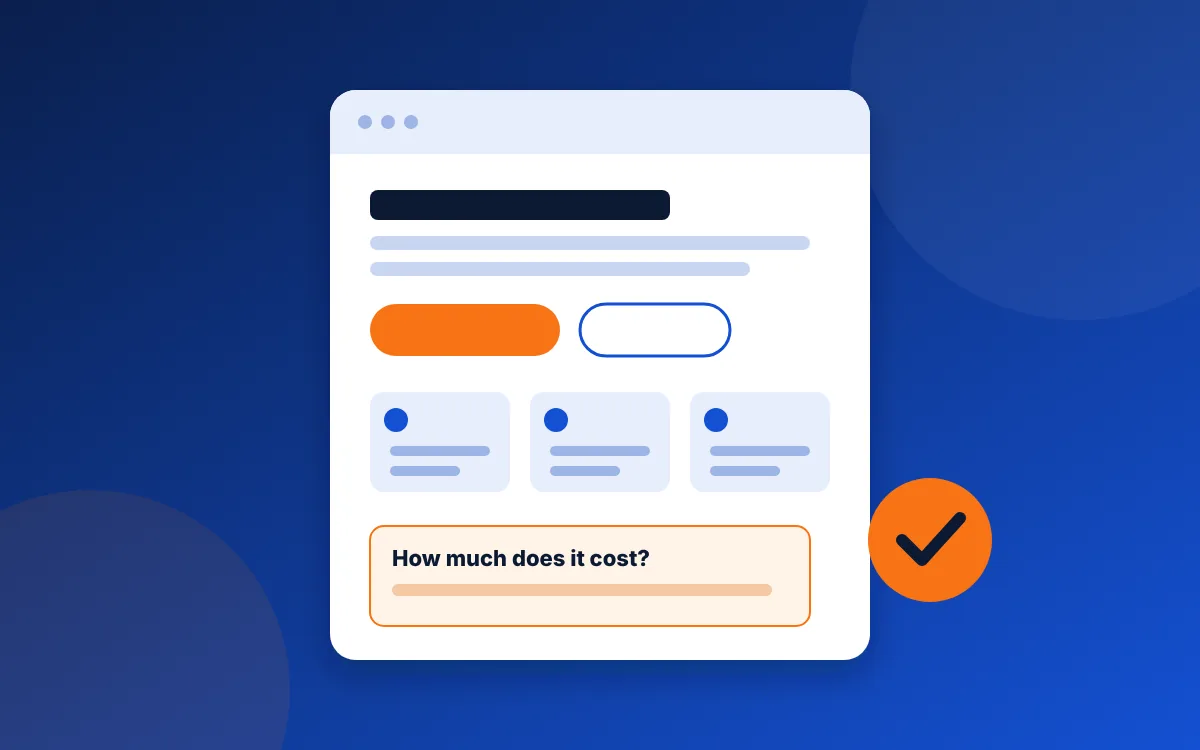
Give every main service its own page. Open it with a direct answer: what you do, where, and roughly what it costs. Then add your process, proof of past work, the questions customers ask, and markup that tells search engines your trade and service area.
What 20 contractor websites were missing
In October 2026 we audited 20 home service websites in the Tulsa area with our 100-point checklist. The same gaps came up again and again:
| Finding | Sites affected |
|---|---|
| No service area stated in the structured data | 19 of 20 |
| No named expert with credentials on the site | 14 of 20 |
| No case studies or project write-ups | 11 of 20 |
| Few headings phrased as customer questions | 9 of 20 |
| No business markup at all | 6 of 20 |
None of these needs a new website. Each one is a change to the pages you already have.
The eight parts of a service page
1. One service, one page
"Drain cleaning", "water heater installation" and "sewer line repair" each deserve their own page. A single "Plumbing services" page can't rank for all three, and AI tools look for a page that clearly answers one question.
2. A title and heading that match the search
Use the words customers type, with your main city: "Water Heater Installation in Tulsa | Smith Plumbing". Keep the title under about 60 characters so it isn't cut off in results.
3. An answer in the first paragraph
Say what you do, where you do it and what it typically costs, in two or three sentences. AI Overviews and ChatGPT quote short, direct answers. A page that opens with "Welcome to our website" gives them nothing to use.
4. Real price ranges
Homeowners want a ballpark before they call. A line like "Most standard tank replacements run $1,400 to $2,200 installed, depending on size and venting" builds more trust than "call for a quote", and it's the kind of fact AI answers repeat.
5. Your process, step by step
What happens after they call: the visit, the quote, the work, the cleanup, the warranty. It answers the unspoken question, "what am I getting into?"
6. Proof from real jobs
Photos of local work, a short write-up of a recent job, your license number and the name of the person in charge. Search engines and AI tools treat named, checkable experience as a trust signal, and so do customers.
7. The questions customers ask
Add a short FAQ with headings phrased the way people ask: "How long does a water heater install take?" Start each answer with the answer, then add detail.
8. Markup that states the facts
Add LocalBusiness (or a specific type such as Plumber or Electrician) and Service structured data with your service area. It tells search engines who you are and where you work, so they don't have to guess.
Common questions
How long should a service page be?
Long enough to answer the questions a customer has before calling. For most trades that's 600 to 1,200 words, but a clear answer at the top matters more than the word count.
Should I make a separate page for every city?
Only when you can say something specific about each area, such as local jobs, common problems or permit rules. Copy-and-paste city pages with only the name swapped rarely rank and can drag the whole site down.
Is it safe to publish prices?
Ranges are safe and helpful. Say what changes the price, such as size, access or materials, and that you confirm the exact figure after seeing the job.
See how your service pages score
The free audit checks every service page against these points and ranks what to fix first.
Get my free audit